Starting a fitness journey can feel overwhelming — especially if you’re a total beginner. Gym equipment looks complicated, workout plans seem confusing, and social media can make exercise feel intimidating. The good news? You don’t need heavy weights, fancy machines, or expensive memberships to get in shape.
All you need is your own body.
Bodyweight Exercises are one of the simplest, safest, and most effective ways to build strength, improve flexibility, and boost overall fitness — especially for beginners. These exercises use your body as resistance, making them accessible anywhere, anytime. Whether you’re working out in your bedroom, living room, or a small apartment, Bodyweight Exercises can help you build a strong foundation without feeling overwhelmed.
What Are Bodyweight Exercises?
Bodyweight Exercises are strength-training movements that use your own body weight as resistance instead of dumbbells, barbells, or machines.
Examples of Bodyweight Exercises include:
- Squats
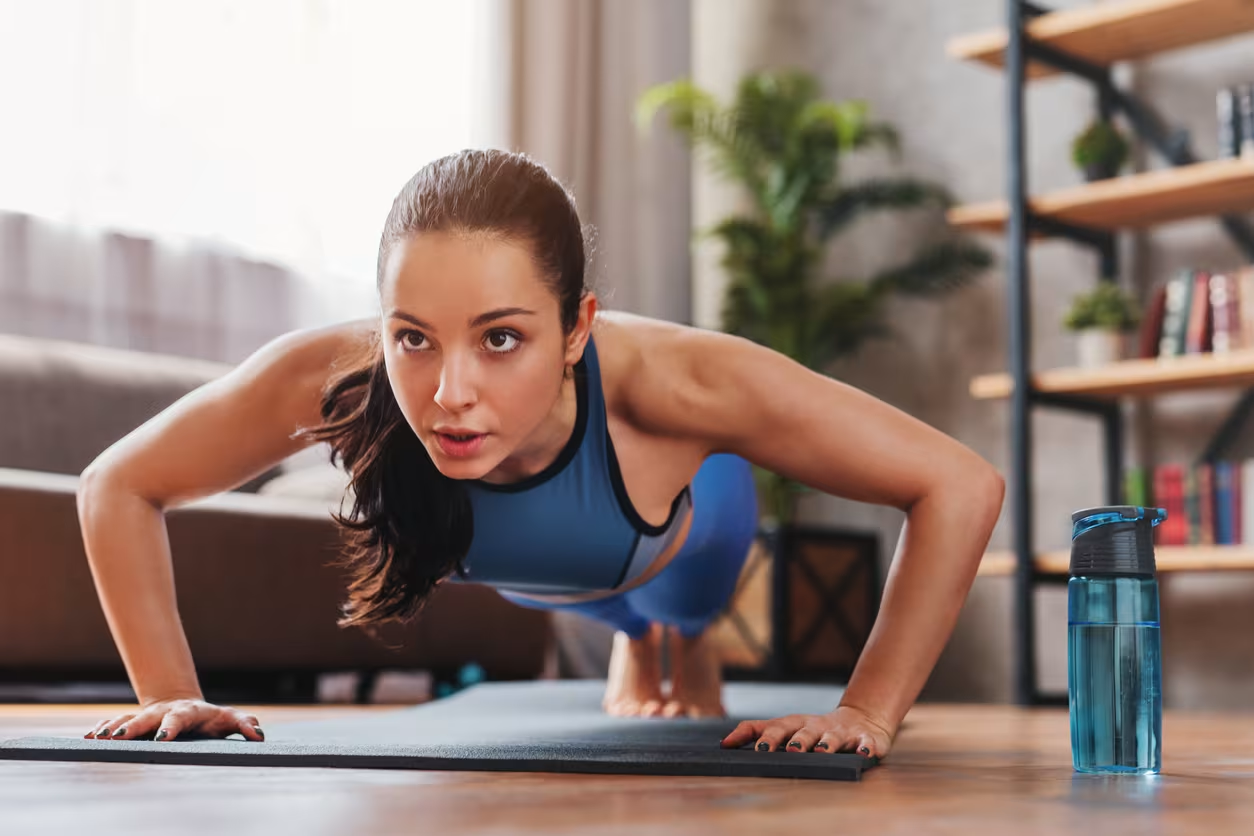
- Push-ups
- Lunges
- Planks
- Glute bridges
- Step-ups
These exercises build strength, endurance, balance, and coordination — all without equipment.
According to the American Council on Exercise, bodyweight training is one of the most effective ways for beginners to build foundational strength safely and efficiently.
Why Bodyweight Exercises Are Perfect for Total Beginners
If you are new to fitness, Bodyweight Exercises are the safest and most practical way to begin.
1. No Equipment Needed
You can train at home, in a park, or in a small room.
2. Lower Injury Risk
Because you control the movement and resistance, there is less strain on joints.
3. Build Foundational Strength
Before lifting weights, your body needs basic strength and stability.
4. Improve Coordination and Balance
Bodyweight Exercises train multiple muscles at once.
5. Easy to Progress
Exercises can be modified to make them easier or harder.
Experts from the Mayo Clinic recommend strength training at least twice per week — and Bodyweight Exercises fully qualify.
The Benefits of Bodyweight Exercises
When done consistently, Bodyweight Exercises can:
- Increase muscle strength
- Improve posture
- Support weight loss
- Boost metabolism
- Improve heart health
- Increase flexibility
- Strengthen bones
- Enhance mobility
- Reduce back pain
- Improve mental health
For total beginners, progress is often noticeable within 3–4 weeks.
How Bodyweight Exercises Build Muscle
Muscles grow stronger when they are challenged through resistance. Even without weights, Bodyweight Exercises create resistance through:
- Gravity
- Leverage
- Range of motion
- Time under tension
- Body positioning
For example:
- A push-up uses your body weight as resistance for your chest and arms.
- A squat challenges your legs using your full body mass.
Beginners experience “newbie gains,” meaning faster strength improvements in the first 8–12 weeks.
Essential Bodyweight Exercises for Total Beginners
Below are the most effective beginner-friendly Bodyweight Exercises for full-body strength.
1. Bodyweight Squats
Muscles Worked: Quadriceps, hamstrings, glutes, core
How to Perform:
- Stand with feet shoulder-width apart
- Keep chest up
- Push hips back
- Bend knees
- Lower until thighs are parallel (or as comfortable)
- Stand back up
Beginner Tip:
Use a chair behind you for support.
Bodyweight squats are one of the most important foundational Bodyweight Exercises.
2. Wall Push-Ups (Beginner Version)
Muscles Worked: Chest, shoulders, triceps
How to Perform:
- Stand facing a wall
- Place hands shoulder-width apart
- Bend elbows and lean toward the wall
- Push back
Progression:
Wall → Knee → Full push-up.
3. Glute Bridges
Muscles Worked: Glutes, hamstrings
How to Perform:
- Lie on your back
- Bend knees
- Lift hips upward
- Squeeze glutes
- Lower slowly
Glute bridges are excellent Bodyweight Exercises for people who sit long hours.
4. Forward Lunges
Muscles Worked: Legs, glutes, balance muscles
Steps:
- Step forward
- Lower back knee toward ground
- Push back to standing
Use a wall or chair if needed.
5. Plank (Modified or Full)
Muscles Worked: Core, shoulders
Start with:
- 15–20 seconds hold
- Knees on floor if necessary
Planks improve posture and stability.
6. Bird-Dog
Often recommended by trainers certified through the National Academy of Sports Medicine.
Steps:
- Start on hands and knees
- Extend opposite arm and leg
- Hold 3 seconds
- Switch sides
This is one of the best stability-focused Bodyweight Exercises.
7. Step-Ups
Use stairs or a sturdy surface.
Step up, then down slowly.
8. Calf Raises
Hold onto a wall and lift heels upward.
Beginner Full-Body Bodyweight Exercises Workout Plan
Here is a structured 4-week plan using only Bodyweight Exercises.
Week 1–2 (3 Days Per Week)
- 10 Squats
- 8 Wall Push-Ups
- 10 Glute Bridges
- 5 Lunges per leg
- 15-second plank
Repeat 2 rounds.
Rest 60 seconds between rounds.
Week 3–4
- 15 Squats
- 10 Knee Push-Ups
- 15 Glute Bridges
- 8 Lunges per leg
- 30-second plank
Repeat 3 rounds.
How to Progress with Bodyweight Exercises
Progression is essential for results.
Ways to make Bodyweight Exercises harder:
- Increase repetitions
- Slow down movements
- Add pauses
- Increase sets
- Reduce rest time
- Try advanced variations
Example:
Squat → Pause squat → Jump squat.
Common Mistakes Beginners Make with Bodyweight Exercises
Avoid these errors:
1. Skipping Warm-Up
Always warm up for 5 minutes.
2. Poor Form
Quality is more important than quantity.
3. Overtraining
Rest days are essential.
4. Inconsistency
Results require routine.
Proper Warm-Up Before Bodyweight Exercises
5-minute beginner warm-up:
- March in place (1 minute)
- Arm circles (30 seconds)
- Hip circles (30 seconds)
- 10 slow squats
- Shoulder rolls
Warming up reduces injury risk and improves performance.
Cool Down After Bodyweight Exercises
Stretch major muscle groups:
- Hamstrings
- Quadriceps
- Chest
- Shoulders
- Lower back
Deep breathing helps recovery.
How Often Should Beginners Do Bodyweight Exercises?
For best results:
- 3–4 sessions per week
- 20–30 minutes per workout
- Rest day between sessions
Light walking on rest days is encouraged.
Can Bodyweight Exercises Help With Weight Loss?
Yes, especially for beginners.
Bodyweight Exercises:
- Increase muscle mass
- Boost metabolism
- Burn calories
- Improve insulin sensitivity
Combine with:
- Healthy diet
- Adequate protein
- Proper sleep
Mental Health Benefits of Bodyweight Exercises
Exercise supports emotional health by:
- Reducing stress
- Improving mood
- Increasing energy
- Boosting self-confidence
Consistent Bodyweight Exercises improve both physical and mental well-being.
30-Day Bodyweight Exercises Challenge for Beginners
Week 1:
Focus on learning proper form.
Week 2:
Increase repetitions slightly.
Week 3:
Add one extra round.
Week 4:
Try harder variations like knee push-ups.
By the end of 30 days, you will notice:
- Increased strength
- Better posture
- Improved endurance
- Higher confidence
Advanced Bodyweight Exercises (When Ready)
After 6–8 weeks, try:
- Full push-ups
- Bulgarian split squats
- Side plank
- Mountain climbers
- Jump squats
Always progress gradually.
Nutrition Tips to Support Bodyweight Exercises
To maximize results:
- Eat protein-rich foods
- Stay hydrated
- Include vegetables and fruits
- Avoid excessive processed foods
- Sleep 7–8 hours
Recovery is essential for muscle growth.
Final Thoughts: Why Bodyweight Exercises Are the Best Starting Point
You do not need:
- Expensive equipment
- A gym membership
- Advanced experience
You only need commitment and consistency.
Bodyweight Exercises are the safest, most practical, and most effective way for total beginners to build strength and confidence.
Start with:
- 3 days per week
- 20–30 minutes
- Focus on form
- Progress slowly
In just a few weeks, your body will feel stronger, your posture will improve, and your confidence will grow.
Your fitness journey starts today — and Bodyweight Exercises are the perfect first step.
Frequently Asked Questions (FAQs) About Bodyweight Exercises
1. What are Bodyweight Exercises?
Bodyweight Exercises are strength-training movements that use your own body as resistance instead of machines or weights. Examples include squats, push-ups, lunges, and planks. They are ideal for beginners because they are safe, simple, and require no equipment.
2. Are Bodyweight Exercises effective for beginners?
Yes, Bodyweight Exercises are extremely effective for beginners. They help build foundational strength, improve balance, enhance coordination, and prepare your body for more advanced training later.
3. How often should beginners do Bodyweight Exercises?
Total beginners should perform Bodyweight Exercises 3 times per week with at least one rest day between sessions. Each workout can last 20–30 minutes.
4. Can Bodyweight Exercises build muscle?
Yes. Beginners can build noticeable muscle using Bodyweight Exercises, especially in the first 8–12 weeks. Progressive overload — such as increasing reps or slowing tempo — helps stimulate muscle growth.
5. Can I lose weight with Bodyweight Exercises?
Bodyweight Exercises can support weight loss by burning calories and building lean muscle. For best results, combine them with a balanced diet, adequate protein intake, and regular walking.
6. Do I need equipment for Bodyweight Exercises?
No equipment is required. However, optional tools like resistance bands or a yoga mat can add comfort and variety later.
7. How long does it take to see results from Bodyweight Exercises?
Most beginners notice improved strength and energy within 3–4 weeks. Visible physical changes typically appear within 6–8 weeks with consistent training.
8. Are Bodyweight Exercises safe for overweight beginners?
Yes, Bodyweight Exercises are generally safe because you control the movement intensity. Start with modified variations such as wall push-ups or chair squats to reduce joint stress.
9. What if I can’t do push-ups?
Start with wall push-ups, then progress to knee push-ups. Gradual progression makes Bodyweight Exercises accessible to everyone.
10. Can I do Bodyweight Exercises every day?
Light movement is fine daily, but structured strength workouts should be done 3–4 times per week to allow muscle recovery.
11. Are Bodyweight Exercises enough without going to the gym?
For total beginners, yes. Bodyweight Exercises can significantly improve strength, endurance, and fitness without a gym. Many people train effectively at home for years using only bodyweight movements.
12. What is the best Bodyweight Exercises routine for beginners?
A simple beginner routine includes:
- Squats
- Push-ups (modified if needed)
- Lunges
- Glute bridges
- Plank
Perform 2–3 rounds, 3 times per week.



**prostafense**
ProstAfense is a premium, doctor-crafted supplement formulated to maintain optimal prostate function, enhance urinary performance, and support overall male wellness.
**neurosharp**
Neuro Sharp is a modern brain-support supplement created to help you think clearly, stay focused, and feel mentally confident throughout the day.
**nerve calm**
NerveCalm is a high-quality nutritional supplement crafted to promote nerve wellness, ease chronic discomfort, and boost everyday vitality.
Ngoài ra, 66b mới nhất còn áp dụng chính sách “Fair Gaming” với cam kết không can thiệp vào kết quả trò chơi và không thiên vị bất kỳ người chơi nào. Điều này trái ngược hoàn toàn với quan điểm phổ biến rằng “nhà cái luôn thắng” – tại 66b mới nhất , cơ hội thắng cuộc phụ thuộc hoàn toàn vào kỹ năng và may mắn của người chơi. TONY03-11O
live slot365 cung cấp các sảnh bài đẳng cấp từ những nhà phát hành lớn. Đồ họa 3D sắc nét cùng âm thanh sống động sẽ khiến bạn không thể rời mắt. TONY03-11O
**boostaro**
Boostaro is a purpose-built wellness formula created for men who want to strengthen vitality, confidence, and everyday performance.
xn88 game có chính sách hoàn tiền cược thua lên tới 20% cho thành viên mới – giảm thiểu rủi ro và tăng cơ hội trải nghiệm. TONY05-15
188v com vn hỗ trợ nạp tiền qua mọi phương thức phổ biến tại Việt Nam: ngân hàng nội địa, Momo, ZaloPay, ViettelPay… Thao tác đơn giản, xác nhận tức thì, không mất phí giao dịch. TONY05-15