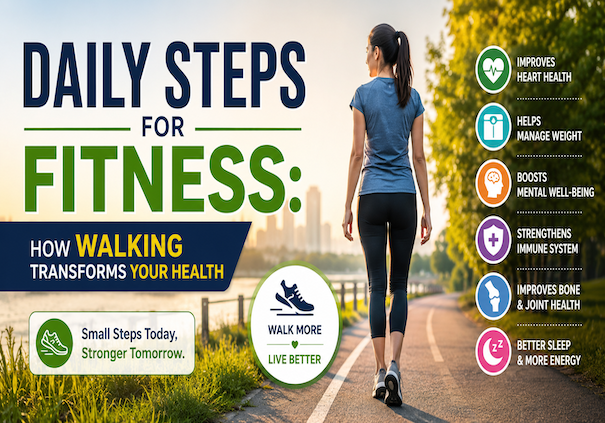
In a world filled with high-intensity workout trends, advanced gym machinery, and complex fitness programs, one of the most effective health strategies remains remarkably simple: walking. Focusing on your daily steps for fitness provides an accessible, low-impact way to improve cardiovascular health, manage weight, and elevate your daily energy levels without the risk of physical burnout.
Whether you are a complete beginner aiming to break away from a sedentary routine or an experienced athlete looking to support active recovery, optimizing your daily steps for fitness establishes a sustainable foundation for lifelong health.
Here is a practical guide to understanding step goals, tracking your physical activity, and seamlessly integrating more movement into your daily routine.
Why Focus on Daily Steps for Fitness?
Tracking your movement through daily step counts shifts the focus toward non-exercise activity thermogenesis (NEAT)—the energy expended for everything we do that is not sleeping, eating, or sports-like exercise. Increasing NEAT plays a major role in overall daily calorie burn and metabolic health.
Prioritizing your daily steps for fitness yields several key benefits:
- Improved Cardiovascular Health: Regular walking lowers blood pressure, improves circulation, and reduces the risk of heart disease and stroke.
- Weight Management and Fat Loss: Consistent daily movement helps maintain a caloric deficit, making weight management feel manageable and natural rather than stressful.
- Enhanced Joint and Bone Health: Unlike high-impact exercises, walking lubricates joints, strengthens supporting muscles, and preserves bone density with minimal stress on knees and hips.
- Mental Clarity and Stress Relief: Walking stimulates the release of endorphins while lowering cortisol levels, serving as a natural mood booster and anxiety reliever.
How Many Daily Steps Do You Really Need?
While the classic benchmark of 10,000 steps per day is widely recognized, modern sports science shows that fitness and health benefits begin at lower thresholds and scale upward based on your individual starting point.
| Activity Level | Daily Step Count Range | Primary Fitness Outcome |
| Sedentary | Under 5,000 steps | Higher risk for metabolic sluggishness and stiffness |
| Low Active | 5,000 – 7,499 steps | Baseline health maintenance; light energy improvements |
| Somewhat Active | 7,500 – 9,999 steps | Optimal sweet spot for blood pressure, mood, and longevity |
| Active | 10,000 – 12,499 steps | Great target for weight loss, endurance, and cardiovascular fitness |
| Highly Active | 12,500+ steps | Excellent athletic conditioning and high daily caloric expenditure |
Setting an achievable target for your daily steps for fitness is far more beneficial than pushing for an arbitrary number that causes fatigue or inconsistency.
5 Easy Ways to Increase Your Daily Steps for Fitness
If your occupation requires sitting at a desk for long periods, reaching a healthy step threshold requires intentional planning. Incorporating these simple habits makes building up your daily steps for fitness effortless:
1. Implement Walking Breaks During Work
Set a timer to take a 3-to-5-minute walking break every hour. Pacing during phone calls, taking stairs instead of elevators, or walking around your office adds hundreds of additional steps to your daily tally.
2. Take Post-Meal Walks
A brief 10-to-15-minute walk after lunch and dinner aids digestion, reduces post-meal blood sugar spikes, and easily contributes 2,000 to 3,000 additional daily steps for fitness.
3. Park Farther Away and Walk
Whether running errands, visiting the grocery store, or commuting to work, parking at the back of the parking lot adds convenient, non-negotiable movement to your day.
4. Turn Catch-Ups into “Walking Meetings”
Reframe social or professional calls into walking sessions. Catching up with a colleague, friend, or family member while strolling outdoors makes hitting your daily step goals enjoyable.
5. Pair Walking with Audio Entertainment
Listen to podcasts, audiobooks, or favorite music playlists exclusively while walking. This habit loop gives you a positive reason to step outside and keep moving.
Frequently Asked Questions (FAQs)
Q1: Is walking enough on its own to build overall fitness?
A: Focusing on daily steps for fitness builds an exceptional cardiovascular foundation and aids metabolic health. For complete physical fitness, pairing daily walking with 2–3 sessions of strength training per week ensures balanced muscle growth and joint stability.
Q2: Does walking speed matter when counting daily steps for fitness?
A: Total volume matters most for overall health and weight management, but brisk walking (where your heart rate is elevated) offers additional cardiovascular conditioning benefits compared to casual strolling.
Q3: How can I accurately track my daily step count?
A: Most modern smartphones feature built-in step counters. Dedicated fitness trackers or smartwatches provide continuous, real-time feedback and reminders to keep you accountable throughout the day.
Conclusion
Building momentum with your daily steps for fitness is one of the most rewarding investments you can make in your personal health. By setting a realistic baseline, gradually increasing your movement targets, and creating simple daily habits, you can enjoy lasting energy, improved longevity, and better fitness—one step at a time.