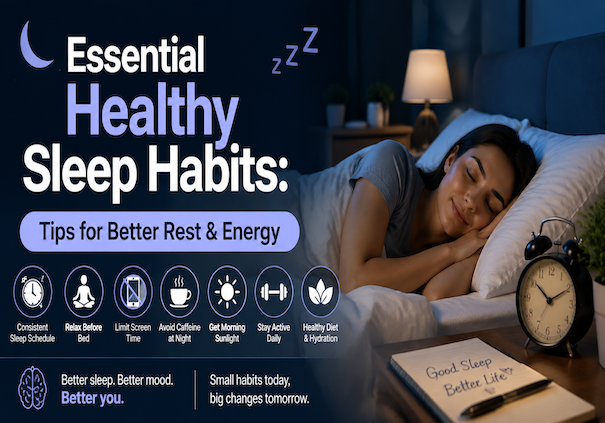
Quality sleep is non-negotiable for human health. It serves as the foundation for physical recovery, cognitive clarity, immune function, and emotional stability. Yet, millions of people regularly struggle with falling asleep, staying asleep, or waking up feeling unrefreshed.
Improving your rest doesn’t require expensive sleep gadgets or heavy sedatives. In most cases, adopting consistent healthy sleep habits—often referred to as sleep hygiene—can naturally align your internal biological clock and dramatically elevate your sleep quality.
Here is a comprehensive guide to building effective healthy sleep habits for deep, restorative sleep every night.
Understanding Your Circadian Rhythm
Your body operates on a natural 24-hour internal clock known as the circadian rhythm. This biological rhythm responds directly to environmental cues—primarily light, temperature, and timing—to signal when it is time to feel alert and when it is time to wind down.
When you practice irregular sleep schedules or expose yourself to harsh artificial lighting late at night, your body struggles to produce melatonin (the sleep hormone). Establishing structured, daily healthy sleep habits helps reinforce your circadian rhythm so you fall asleep faster and stay in deep sleep longer.
7 Core Healthy Sleep Habits to Transform Your Rest
Implementing these science-backed practices into your everyday routine creates the optimal environment for effortless sleep.
Building the Perfect Sleep Routine
1. Set fixed sleep & wake times (even on weekends)
2. Get 15-30 mins of outdoor morning sunlight
3. Cut off caffeine 8-10 hours before bed
4. Put away screens 60 minutes prior to sleep
5. Keep your bedroom cool, dark, and quiet
1. Maintain a Strict Sleep Schedule
Go to bed and wake up at the exact same time every day—including weekends. Consistency reinforces your body’s sleep-wake cycle, making it easier to fall asleep naturally without tossing and turning.
2. Prioritize Natural Morning Light Exposure
Expose your eyes to natural sunlight within 30 to 60 minutes of waking up. Sunlight halts melatonin production and sets a timer for your brain to release sleep hormones later that evening.
3. Establish a 60-Minute Screen-Free Wind-Down
Blue light emitted by smartphones, tablets, and TVs tricks your brain into thinking it is still daytime, delaying melatonin secretion. Turn off screens an hour before bed and replace them with relaxing activities like reading a physical book, gentle stretching, or listening to calming music.
4. Create an Optimal Sleep Sanctuary
Your bedroom environment plays a massive role in sleep continuity:
- Temperature: Keep your bedroom cool (ideally between 60°F and 67°F or 15°C and 19°C). A drop in core body temperature naturally triggers sleepiness.
- Darkness: Use blackout curtains or a comfortable eye mask to block ambient light pollution.
- Quiet: Use white noise machines or earplugs to mask disruptive background noises.
5. Mind Your Caffeine and Alcohol Intake
Caffeine has a half-life of roughly 5 to 7 hours, meaning half of that afternoon coffee is still active in your brain by bedtime. Establish a caffeine cutoff time around 12:00 PM or 2:00 PM. Additionally, while alcohol may cause quick drowsiness, it severely disrupts REM sleep and causes mid-night awakenings.
6. Avoid Heavy Late-Night Meals
Eating large, heavy, or spicy meals within 2 to 3 hours of sleep forces your digestive system to stay active, leading to acid reflux, elevated heart rate, and fitful sleep.
7. Follow the “20-Minute Rule” for Tossing and Turning
If you find yourself lying awake in bed for more than 20 minutes, get out of bed. Move to a dimly lit room and do a quiet, non-stimulating activity (like reading) until you feel sleepy. Returning to bed only when tired prevents your brain from associating your bed with stress and frustration.
Daily Sleep Hygiene Checklist
Use this quick summary table to evaluate your current habits against key healthy sleep habits:
| Time of Day | Recommended Action | Main Purpose |
| Morning | Get 15–30 mins of natural sunlight | Anchors your circadian rhythm |
| Afternoon | Stop caffeine consumption by 2:00 PM | Prevents nervous system stimulation at night |
| Evening | Dim overhead house lights after sunset | Signals the brain to begin melatonin production |
| Night | Put screens away 1 hour before sleep | Eliminates sleep-disrupting blue light |
| Bedtime | Ensure room is cool (60–67°F) and dark | Promotes uninterrupted deep sleep cycles |
Frequently Asked Questions (FAQs)
Q1: How long does it take for new healthy sleep habits to improve sleep quality?
A: Many people notice subtle improvements within 3 to 7 days of maintaining a consistent sleep-wake schedule. However, fully resetting a disrupted circadian rhythm usually takes 2 to 3 weeks of strict daily consistency.
Q2: Is taking melatonin supplements safe for building healthy sleep habits?
A: Melatonin supplements can be helpful for short-term jet lag or shift work adjustments. However, relying on them long-term is not recommended without consulting a doctor. Focusing on natural behavioral sleep habits is safer and more effective for long-term sleep health.
Q3: How many hours of sleep do adults really need?
A: While individual needs vary slightly, the vast majority of healthy adults require between 7 and 9 hours of quality, uninterrupted sleep per night for optimal brain and body function.
Conclusion
Mastering healthy sleep habits is one of the most powerful, cost-effective investments you can make in your overall health and longevity. By keeping a consistent schedule, optimizing your bedroom environment, cutting out late-day caffeine, and putting away electronic devices before bed, you give your body the exact conditions it needs for deep, restorative sleep. Pick two or three habits from this guide to focus on tonight, and watch your daily energy, focus, and mood transform over the coming weeks.